Germany vs Argentina, an Endless Classic Duel


Germany vs Argentina is a World Cup classic match that refuses to fade with time. The meeting of two giants from Europe and South America has become the most frequently contested fixture in World Cup finals history. The two nations have faced each other three times in the showpiece occasion: 1986, 1990 and 2014.

The rivalry truly gathered momentum at the 1986 World Cup and continued four years later in Italy, where the two sides took turns beating each other in consecutive finals. Their feud resurfaced again in the mid-2000s, as Die Mannschaft and La Albiceleste were drawn together in decisive knockout rounds at three consecutive tournaments.

Naturally, this heavyweight clash has also been defined by the stars of different eras. In the 1980s and 1990s, Germany boasted figures such as Lothar Matthäus, Rudi Völler and Jürgen Klinsmann, while Argentina relied on the brilliance of Diego Maradona, Jorge Valdano and Sergio Goycochea. The 2000s ushered in a new generation, with names like Miroslav Klose, Manuel Neuer, Thomas Müller, Lionel Messi, Javier Mascherano and Ángel Di María taking centre stage.

Germany vs Argentina at the World Cup

Across the history of football’s greatest tournament, Germany and Argentina have met seven times. Below is the full list of their World Cup encounters:

Sweden 1958 – Germany vs Argentina 3–1 (Group stage)

England 1966 – Germany vs Argentina 0–0 (Group stage)

Mexico 1986 – Argentina vs Germany 3–2 (Final)

Italy 1990 – Germany vs Argentina 1–0 (Final)

Germany 2006 – Germany vs Argentina 1–1 (4–2 pens)* (Quarter-finals)

South Africa 2010 – Argentina vs Germany 0–4 (Quarter-finals)

Brazil 2014 – Germany vs Argentina 1–0 (Final)


*penalty shoot-out


Germany wins: 3

Argentina wins: 1

Draws: 2


The Most Iconic Duels

 The most iconic clashes, unsurprisingly, have come in the finals. For Die Mannschaft, the 2014 final stands above the 1990 triumph. Not only was it more dramatic, but it also saw Germany become the first European nation to lift the World Cup on South American soil, a territory long considered hostile to teams outside CONMEBOL.

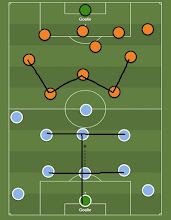
Joachim Löw’s side lined up in a 4-3-3 formation, while Lionel Messi and co deployed a 4-2-3-1. In that historic match, Argentina created at least nine clear chances, three of them falling to Gonzalo Higuaín, who was then often singled out for the blame on their loss. One goal was ruled out, others went wide, including an effort from Messi himself. Germany, meanwhile, produced eight notable chances through Andreas Schürrle, Toni Kroos and Benedikt Höwedes, before Mario Götze struck the decisive goal.

From Argentina’s perspective, however, the 1986 final remains the most iconic. It is remembered as one of the most thrilling and high-scoring World Cup finals of all time. Both teams lined up in identical 3-5-2 systems and traded blows throughout. Argentina surged two goals ahead through a José Luis Brown header and a close-range finish from Real Madrid striker Jorge Valdano. Germany roared back within six minutes via Karl-Heinz Rummenigge and Rudi Völler. The decisive moment finally arrived when Jorge Burruchaga finished off a perfectly sublime assist from a closely marked Maradona, sealing immortality for La Albiceleste.


Comments

Popular posts from this blog

The Best England-born Scottish International in the World Cup

  A few Scottish internationals have been actually England -born and managed to shine in the FIFA World Cup. Scotland finally returns to the FIFA World Cup ending their 28-year wait this year. The Tartan Army boss, Steve Clarke , knows they have to improve their team before the kick off to end their negative record in the final round. Scotland has never been able to progress from the group stage in their world cup campaign. This year they hope to do things differently. Unfortunately, Scott McTominay and Co are seeded in a fairly tough group with Morocco , Haiti and Brazil.  Steve Clarke’s men are in need of more prolific forwards in the squad following the not-so-satisfactory form of their attacking lines. Che Adams just scored two goals in the qualifiers while Lyndon Dykes or Lawrence Shankland only netted once each. Such a disappointing record if they aim to advance further in North America later. Thus, when Newcastle’s Harvey Barnes was eligible to switch sides to Scotla...

The European Elite Teams’ Banter Era in Modern Football

  Each of Europe's elite teams has their own 'banter era' in modern football, during which they failed to win any prestigious titles. The 'Banter Era' is defined as a period in which a football team goes through difficult years without winning a notable top title, such as a league title or a continental top flight championship. In this era, teams consistently underperform, producing disappointing results and campaigns. In Europe, almost all elite sides and the powerhouses in the top five league, have experienced such a ‘dark age’, except perhaps Bayern Munich. Some clubs managed to end it before deteriorating , whereas others had to struggle for years before finally putting an end to their misery. Recently, more than one elite clubs have found themselves in the midst of such an unwanted era. Italian giant, Juventus, French side, Olympique Marseille, the Dutch powerhouse, Ajax Amsterdam and last but not least, the once great side, Manchester United. Among those...

Top El Classicos with Englishman as the Protagonist

  A few El Clásico games have been decided by English players in the matches’ history, especially during modern times. El Classico 2025 is set to be held this weekend on Sunday, October 26. This would be the first time ever when two sides have English players in the same season. Both teams have a long history with Englishmen, but they belong to different eras and seasons. In the past, prior to World War II, Barcelona had 10 Englishmen in the squad, with Jack Greenwell as one of the most notable ones, whereas their archrival in the capital only had one name. However, things went the opposite in the modern era. Los Blancos went ahead and became more English-friendly with seven players since the 1980s, while their Catalan counterparts have only had two names ever since. The Englishmen in Madrid were even top names in the era, especially in the 2000s when the superstars David Beckham and Michael Owen joined the Los Galacticos after Laurie Cunningham in the 1980s and Steve ...