Vittorio Pozzo, Pioneer Architect of Italy’s Glory


The legendary coach Vittorio Pozzo is remembered not merely as a World Cup winner, but as the pioneering architect who laid the foundations of Italian football’s greatness.

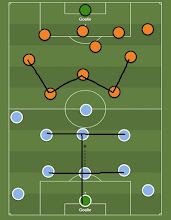
Any discussion of the World Cup feels incomplete without Italy — and Italian football itself is inseparable from Pozzo. He not only guided Italy national football team through the early era of major international tournaments, but alongside his rival Hugo Meisl, the mastermind of the Austrian national side, he helped develop an evolutionary tactical system that would inspire modern football. Known as the *Metodo* system, it is widely regarded as the precursor to the now-popular 4-3-3 formation. That tactical innovation enabled Pozzo to deliver back-to-back World Cup titles in 1934 and 1938 — a record that remains unmatched to this day.

World Cup Achievements

Pozzo’s journey with Italy began long before the inaugural World Cup, specifically at the 1912 Olympic Games, where the Azzurri were eliminated in the first round. Despite that setback, the Italian Football Federation (FIGC) retained its faith in the former manager at Pirelli. Pozzo was reappointed for the 1924 Olympics and became the permanent national coach in 1929. However, since Italy did not participate in the first World Cup in 1930, his tournament debut came four years later.

The journalist-turned-coach made an immediate impact. Italy crushed the United States 7–1 in the opening round of the 1934 World Cup. Yet sterner challenges awaited. Although Pozzo’s side overcame Spain in the quarter-finals and Austria in the semi-finals to reach the final, critics claimed their success was aided by referees operating under political pressure from dictator Benito Mussolini. As a result, the 1934 triumph was viewed by some as less than entirely pure.

Four years later in France, however, Pozzo emphatically silenced the doubters. Led by Silvio Piola and his teammates, Italy secured their second consecutive title in convincing fashion, defeating Norway, hosts France and Brazil before producing a commanding display against Hungary in the final. Here are the results of Gli Azzuri under his tutelage in two World Cup editions:


Win

Draw

Lose

Goal scored-conceded

Italy 1934 *

 4

1

0

11-2

France 1938

 4

0

0

11-5

* including replays

Other Achievements

Vittorio Pozzo was not only successful in leading Italy national football team to World Cup glory. He also guided Italy to the gold medal at the 1936 Berlin Olympics after defeating Austria 2–1 in the final, and twice delivered the Central European International Cup titles in the periods 1927–1930 and 1933–1935. That regional competition later became the forerunner to the European Championship, which was first held in 1960. The final match he oversaw came in the quarter-finals of the 1948 Olympic Games, where his side were beaten 5–3 by Denmark.

Alongside his managerial career, Pozzo also worked as a journalist for *La Stampa*, one of Italy’s oldest newspapers. After stepping away from coaching, the former technical director of Torino between 1912 and 1922 covered Italy’s matches at the 1950 Wor

Comments

Popular posts from this blog

Father and Son Footballers who played for different nations

  A number of father-and-son footballers have surprisingly not played for different national teams due to a various number of reasons. Football often runs in the family. Ideally, they all shine and have a chance to play for the same national team. Unfortunately, in some families, it is not always the same. The father sometimes becomes the star while the son barely can match the father’s stardom, or the other way around. Having a father who was also a famous footballer does not always give you an advantage. On the contrary, it can put huge pressure on the son, which eventually has an impact on their form. Such could lead to their failure to earn a cap in his father’s national team. Let alone thrive with them. That is what Luca Zidane experiences. He is the son of Zinedine Zidane, Les Blues' hero in the 1998 FIFA World Cup and EURO 2000. His father was undoubtedly one of the greatest footballers of all time with three FIFA Best awards in hand. On the other hand, Luca has neve...

The Best England-born Scottish International in the World Cup

  A few Scottish internationals have been actually England -born and managed to shine in the FIFA World Cup. Scotland finally returns to the FIFA World Cup ending their 28-year wait this year. The Tartan Army boss, Steve Clarke , knows they have to improve their team before the kick off to end their negative record in the final round. Scotland has never been able to progress from the group stage in their world cup campaign. This year they hope to do things differently. Unfortunately, Scott McTominay and Co are seeded in a fairly tough group with Morocco , Haiti and Brazil.  Steve Clarke’s men are in need of more prolific forwards in the squad following the not-so-satisfactory form of their attacking lines. Che Adams just scored two goals in the qualifiers while Lyndon Dykes or Lawrence Shankland only netted once each. Such a disappointing record if they aim to advance further in North America later. Thus, when Newcastle’s Harvey Barnes was eligible to switch sides to Scotla...

The Ex-Goalkeepers Turning Successful Managers Outside the Top Leagues

  Several notable former goalkeepers who thrive as managers from outside the European top leagues deserve recognition. The goalkeeper position has often been underrated despite its crucial role in football defence, especially in the past. Goalies tend to be deemed less likely to succeed when they become managers. Being a tactician demands the ability to read the game in their playing career. Thus, the best head coaches are normally the former midfielders or defenders. The likes of Pep Guardiola, Carlo Ancelotti, Luis Enrique, Zinedine Zidane, Jurgen Klopp, and Thomas Tuchel are the proven examples, as they all used to operate from the second line or backline and get involved in the attacking build-up. However, it does not mean that former shot-stoppers is bound to fail in their managerial career. Some manage to shine as well when they are in the dugout. Julen Lopetegui, Nuno Santo, Dino Zoff, and Raymond Goethals are the popular examples. They have been frequently discussed d...